
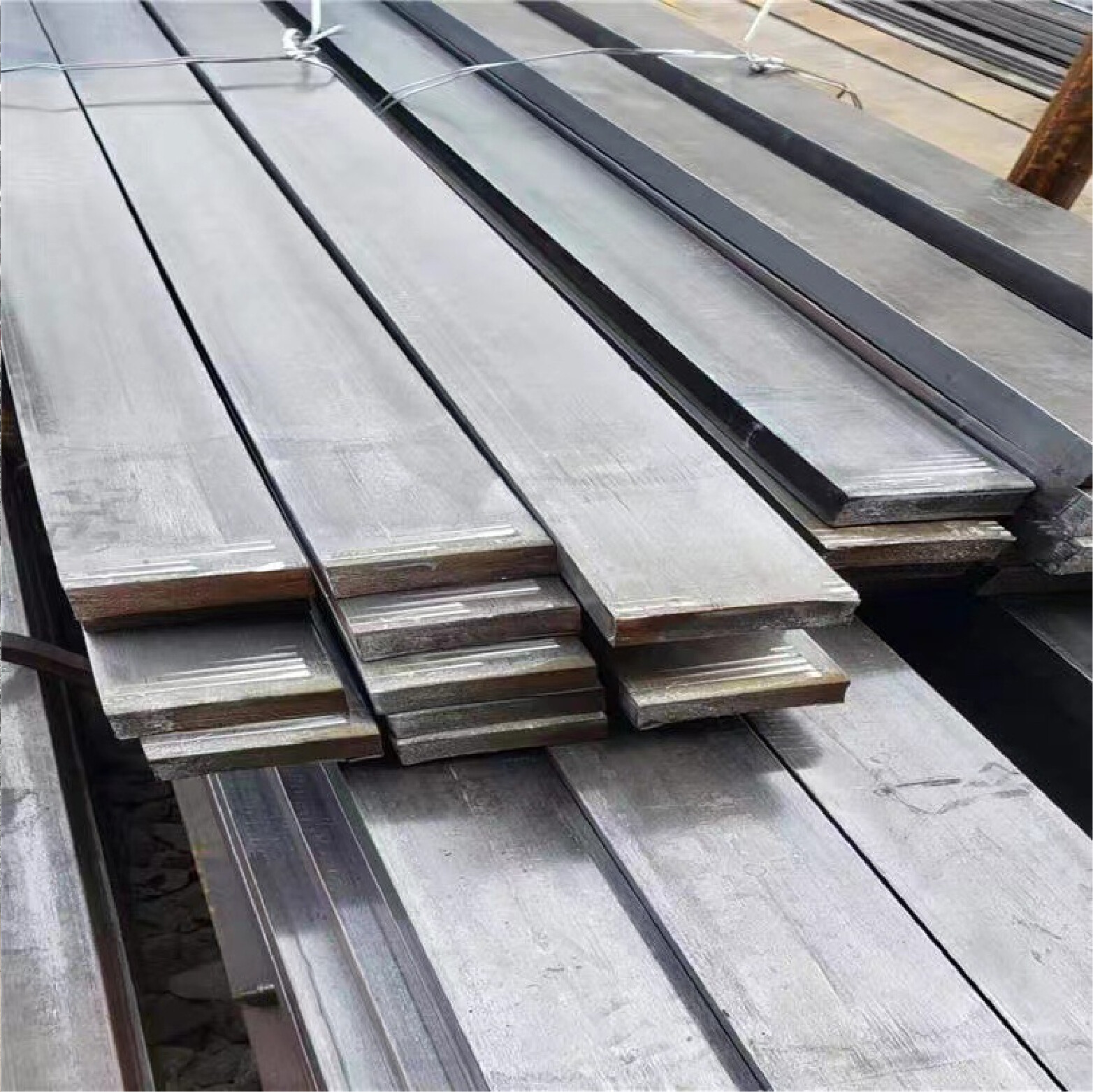
From a technical perspective, flat steel has obvious advantages. Its product specifications are distinctive, with a thickness ranging from 8 - 50mm, a width of 150 - 625mm, a length of 5 - 15m, and a relatively dense specification interval, which can fully meet the diverse needs of users. In many cases, it can be directly welded without cutting. In terms of surface quality, the secondary application of high-pressure water descaling process in the production process ensures the smoothness of the steel surface. The second stand rolling in the finishing process ensures good verticality on both sides, clear corners, and excellent surface quality on the edges. In terms of size control, the continuous rolling process combined with automatic live roll and automatic control ensures high product size accuracy, with parameters superior to those of medium plates. The plate shape straightness is good, and the cold cutting and shearing also ensure high length measurement accuracy. The material strictly follows national standards, ensuring reliable quality.
Based on these characteristics, flat steel is widely used in many fields. In the construction industry, flat steel is commonly used as structural components for building frames and escalators, providing stable support for buildings. In the machinery manufacturing industry, it can be used to manufacture various tools and mechanical parts, thanks to its high strength and good wear resistance, meeting the requirements of long-term use. In the automotive industry, flat steel is involved in the manufacturing of vehicle body structural components, enhancing the safety and durability of vehicles. Additionally, in industries such as mining machinery and lifting machinery, flat steel's high strength and easy processing properties are often utilized.
With the continuous advancement of industrial technology, the production process of flat steel is constantly optimized, and its quality and performance have been further improved. The application fields are also continuously expanding. It can be foreseen that in future various construction projects and industrial productions, flat steel will continue to play an important role and contribute to the development of various industries.